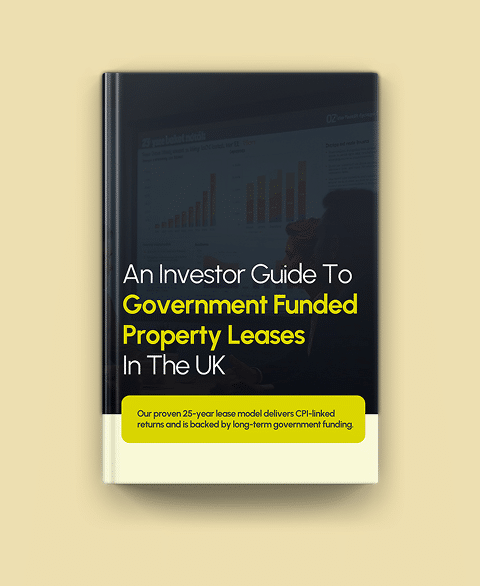
Download the investment brief explaining how government funded property leases are being used to create stable, lower stress property income for experienced investors.
Rising interest rates, regulatory change including the Renters Rights Bill, and growing management burdens have quietly eroded the reliability of buy to let income.
Buy to Let Margins Are Being Crushed
Rising interest rates, punitive taxation, EPC requirements, and escalating running costs have stripped buy to let of meaningful margin. At 70% LTV, many landlords are left with minimal monthly surplus after tax. One repair, one void period, or one rate increase is often enough to wipe out an entire year of returns.
Landlord Control Is Being Systematically Removed
The Renters Rights Bill has fundamentally shifted risk onto landlords. The removal of Section 21, longer possession timelines, and expanded tenant protections have increased the likelihood of prolonged income disruption. Even a single problem tenancy can now result in months of lost rent while costs and obligations continue.
Buy to Let No Longer Justifies the Time or Risk
What was once a relatively passive strategy has become increasingly operational. Ongoing compliance changes, agent management, maintenance coordination, and regulatory uncertainty now demand disproportionate time and attention. For many investors, the return on capital and effort no longer stacks up against alternative property models.
What You Will Learn Inside the eBook.
Understand why experienced investors are exiting buy to let and how supported living is securing long term, inflation linked income in a chronically undersupplied market
Why Buy to Let Breaks Down Over Time
This eBook explains how rising regulation, leverage pressure, and tenant risk have reshaped buy to let, culminating in the Renters Rights Bill. Even well run portfolios now face reduced control and longer income disruption. The issue is structural, not managerial, and requires a different approach to property income.
How Supported Living Delivers Predictable Income
Learn how supported living replaces volatile rental income with long term, inflation linked leases backed by government funding. You still own the property, but income is secured through contractual certainty rather than tenant behaviour, market cycles, or ongoing management involvement.
How Investors Achieve True Hands Off Ownership
Discover how fully repairing and insuring leases transfer maintenance, compliance, and day to day management to regulated housing associations. No voids, no arrears, no agent oversight, and no ongoing running costs, allowing investors to step back without giving up ownership.
Why Demand in Supported Living Is Structural, Not Cyclical
Understand the scale of undersupply driving this sector, including decades long waiting lists, statutory funding obligations, and long term government commitments. Demand is not driven by sentiment or pricing. It is driven by legislation, demographics, and legal duty.
How Inflation Protection Is Built Into The Model
See how CPI linked rent reviews protect purchasing power automatically, without refinancing, rent negotiations, or exposure to tenant affordability pressures. Income keeps pace with inflation by design, rather than relying on market timing or rental increases.
The Risks Involved And How They Are Mitigated
This eBook addresses risk directly. It explains what happens if a housing association fails, how continuity of care protects income, what contractual safeguards exist, and how exits work over time, giving investors a balanced view before committing capital.
What Investors Say After Transitioning Away From Buy To Let
Independent feedback from investors who stepped away from buy to let to prioritise stability, freedom, and reliable income.
“Assisted Living investments supported my second venture into a new market, guiding me to completion.”
Anthony
“Working with Assisted Living Investments to buy my Social Housing Property was smooth and effortless.”
Henry J
“Everything was handled quickly, and I received my first rent payment sooner than expected.”
James T
“No pressure, just facts.”
Justin G
“I was kept in the loop and Yale Housing back dated my rent so I didn’t lose out on the income I would have not had.”
Jacen B
“They answered all my questions and made the whole process feel simple and secure.”
Julian D
“Just steady, quarterly revenue with no maintenance, agents, or tenant problems.”
John C
“No pressure, just facts.”
Justin G
“The team at Assisted Living Investments UK is really supportive and quick to respond.”
Loretta M
“The lease terms were clear, the legal team was efficient, and I was kept in the loop every step of the way.”
Christine C
“The team answered all my questions about legal terms and inflation adjustments.”
Richard A
“I chose Assisted Living Investments because I wanted a completely hands-off investment experience.”
Paul S
Why Supported Living Investments Matter
The UK is facing a significant structural shortage of suitable supported housing, with waiting lists extending for years in many areas. Local authorities are legally required to provide safe, long term supported accommodation, but supply has not kept pace with demand.
To address this gap, specialist housing providers and regulated associations lease properties under long term agreements, often backed by government funding and structured to prioritise stability and continuity.
For investors, this creates a markedly different investment profile compared with traditional buy to let. Instead of relying on market rental cycles, tenant sourcing, and day to day property management, supported living leases focus on long term contracted arrangements with professional housing partners, where operational responsibilities sit with the provider.
The purpose of this investment brief is to explain how these leases work, where the risks actually sit, and what investors should consider before making a decision.
3 Key Structural Benefits:
Long term, government-supported lease arrangements with housing partners
Demand underpinned by statutory need and chronic shortage
Hands-off structure with operational responsibilities managed by specialist providers
Yes, The UK government has a statutory obligation to provide housing and care for vulnerable adults.
“Government sets out ambitions for a social rent revolution through the new £39 billion Social and Affordable Homes Programme.” – Gov.UK
Demand is severe. As the data shows, waiting lists are extremely long across the country.
Top 5
Years
Westminster
107
Enfield
105
Merton
102
Wandsworth
82
Camden
82
Top 5 (Outside London)
Years
Mansfield
75.5
Slough
74.3
Solihull
27.9
Bolton
27.3
Broxbourne
23
Source: National Housing Federation UK
Providing this housing via private partnerships is significantly more cost-effective for the government than using hospitals or emergency accommodation. This model is structurally necessary.
Why cash buyers only?
High-street lenders generally do not finance commercial leases for vulnerable care. This is an institutional-grade asset class, not a standard Buy-to-Let.
How is the rent sustainable?
It saves the government money. Paying for this housing is significantly cheaper than the £4,000–£6,000/month cost of keeping patients in emergency hotels or hospital beds.
How secure is the government funding?
Yes, It is a statutory obligation, not a grant. Even if a local council struggles financially, the central government is legally required to cover these costs.
What if the provider fails?
We partner with FCA-registered providers. If one fails, a regulator-mandated safety net ensures another provider steps in immediately to manage the lease.
What are my exit options?
Refinance: Withdraw up to 50% of your capital after just 6 weeks.
Resale: Sell the asset on the open market after Year 3.
Is it really zero maintenance?
Yes, The “Full Repairing and Insuring” (FRI) lease legally obligates the Housing Provider to pay for all maintenance, insurance, and repairs.
You pay nothing.
Download the Free eBook and Learn How to Transition Into Supported Living Investments
Download the Supported Living Investment Guide below to understand how investors are moving away from buy to let and restructuring property income for greater stability, predictability, and long term security. The guide explains how supported living investments work in practice, including income structure, lease security, demand fundamentals, and the key risks investors need to understand before proceeding.
We respect our clients’ privacy. Your personal details will not be shared with third parties. By submitting your details you consent to being contacted by ATX Global and Assisted Living Investments by telephone and email for this and similar marketing material including our latest news and property launches. You will also be signed up to the ATX Global and Assisted Living Investments newsletter. You can opt out of receiving the newsletter at any time by clicking the unsubscribe link at the bottom of the email.